



Home > Alloy Steel > Alloy Steel Coils
Alloy Steel Coils, produced through human ingenuity and expertise, result from the meticulous blending of diverse metals. Crafted with precision in manufacturing processes, these coils embody the collaborative efforts of skilled professionals. Human-generated alloy steel coils exhibit enhanced strength, durability, and resilience, making them indispensable across industries like automotive and construction. With a keen focus on quality and performance, the hands-on approach in their creation ensures that these coils meet stringent standards for diverse applications, showcasing the harmonious interplay of human skill and metallurgical innovation.
| Specifications | ASTM A387 / ASME SA387 |
| Thickness | 1mm-300mm |
| Width | 1000mm, 1219mm, 1500mm, 1800mm, 2000mm, 2500mm, 3000mm, 3500mm, 4050mm etc |
| Length | 2000mm, 2440mm, 3000mm, 5800mm, 6000mm, 12000mm, 15000mm etc |
| Surface | 2B, 2D, BA, NO.1, NO.4, NO.8, 8K, mirror, checkered, embossed, hair line, sand blast, Brush, etching Manufacturer and Supplier |
| Finish | Hot rolled plate (HR), Cold rolled sheet (CR) |
| Form | Coils, Foils, Rolls, Plain Sheet, Shim Sheet, Strip Manufacturer and Supplier |
| Density | Melting Point | Tensile Strength | Yield Strength (0.2%Offset) | Elongation |
| 8.1 g/cm3 | 1443 °C (2430 °F) | Psi -80,000, MPa -551 | Psi – 35,000, MPa – 241 | 30% |
| Grade | C | Mn | Si | S | Cu | Ni | Cr | Fe | Mo | P |
| Alloy 20 | 0.07 max | 2.00 max | 1.00 max | 0.035 max | 3.0-4.0 | 32.0-38.0 | 19.0-21.0 | 29.85 min* | 2.0-3.0 | 0.045 max |
At PipingMart, we take pride in being the largest supplier and manufacturer in the UAE, offering cutting-edge solutions for all your piping needs. With state-of-the-art production plants strategically located in the UAE, we boast a vast inventory of over 25,000 tons of premium-quality materials readily available in stock.
Contact us to get a quick quote for your requirement.
We offer These Alloy Steel Coils as per DIN, ISO, JIS or ANSI Standard.
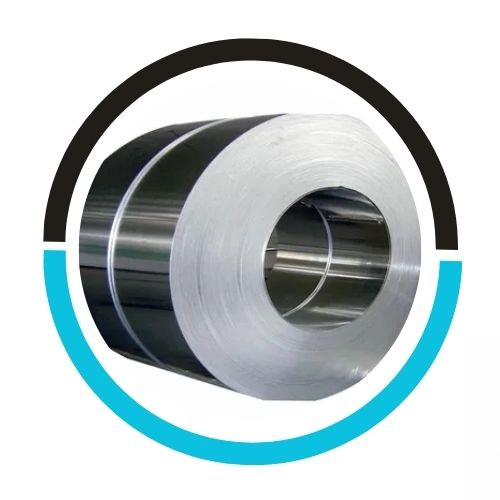
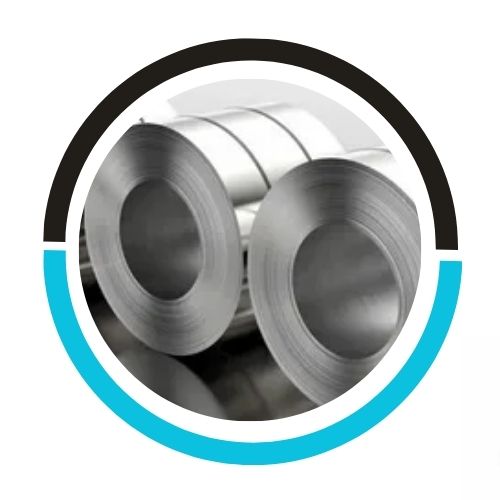
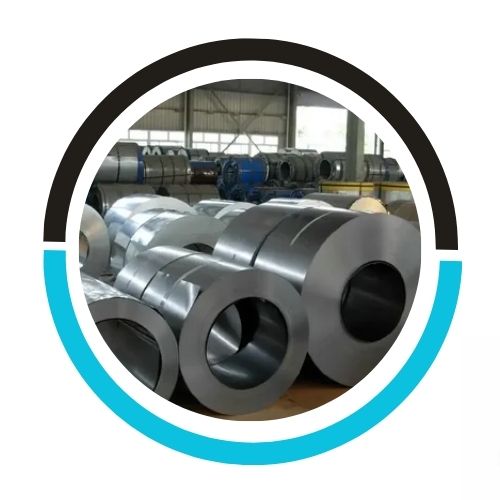
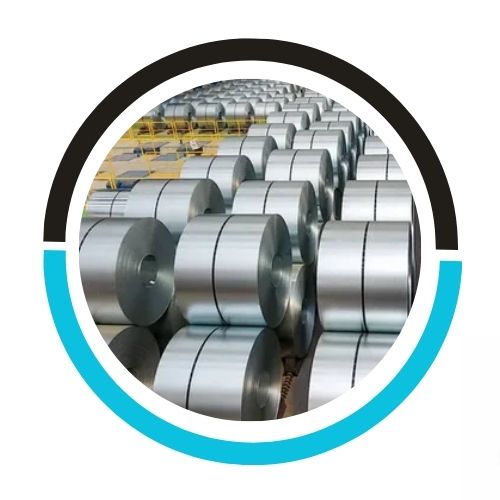
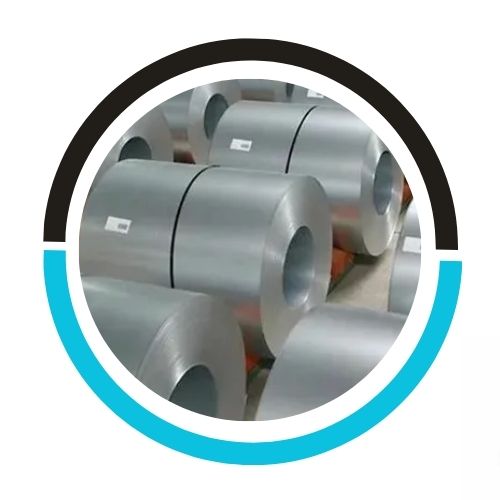

Alloy Steel Coils applications are as diverse as the industries they serve driven primarily by the aerospace, railway, construction and automotive industries with petrochemical, nuclear, medical, Oil & Gas, Chemical, Pharmaceutical, Food & Beverage, Nuclear, Thermal Power plants, Paper and Pulp, marine and mining, etc.
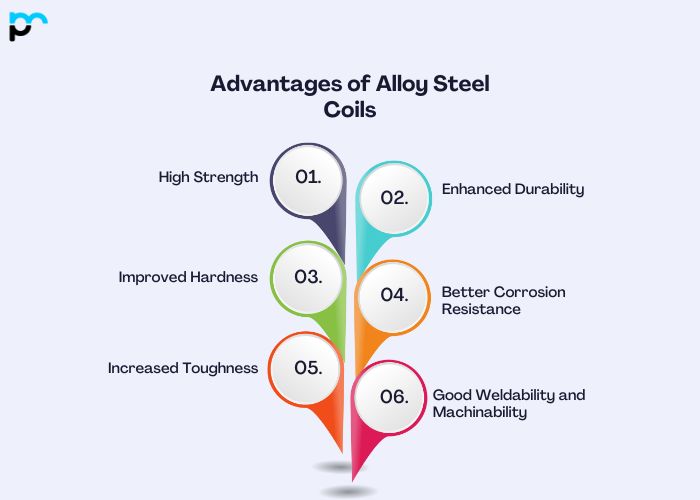
Yes, alloy steel coils can be welded. However, the welding process may vary depending on the specific alloy composition and properties of the coils. Generally, preheating and post-weld heat treatment may be required to prevent cracking and ensure proper weld strength. Additionally, selecting the appropriate welding technique, filler metal, and welding parameters is essential to achieve high-quality welds and maintain the integrity of the alloy steel coils. With proper preparation and execution, alloy steel coils can be successfully welded to fabricate various components and structures for diverse industrial applications.
Alloy steel coils find applications across various industries due to their versatile properties. They are commonly used in automotive manufacturing for engine components, chassis, and suspension systems. In construction, alloy steel coils are utilized for structural components like beams and columns. They also play a crucial role in the aerospace industry for aircraft parts such as landing gear and engine components. Other applications include power generation equipment, mining machinery, tool manufacturing, and marine components, where their strength, durability, and resistance to corrosion are highly valued.
For joining alloy steel coils, several welding techniques are recommended based on the specific requirements of the application and the alloy composition of the coils. Commonly used welding techniques include gas metal arc welding (GMAW), shielded metal arc welding (SMAW), and flux-cored arc welding (FCAW). Additionally, techniques such as gas tungsten arc welding (GTAW) and submerged arc welding (SAW) may be suitable for certain applications. The choice of welding technique depends on factors such as the thickness of the material, desired weld quality, and environmental conditions. Proper preparation, including preheating and post-weld heat treatment, is often necessary to ensure strong and reliable welds with alloy steel coils.
Yes, there are several special considerations for machining or fabrication of alloy steel coils. Alloy steel typically has higher hardness and strength compared to carbon steel, which can make machining more challenging. Therefore, it’s important to use appropriate cutting tools and machining parameters to achieve desired results without excessive tool wear or workpiece deformation. Additionally, proper lubrication and cooling are essential to prevent overheating and maintain dimensional accuracy during machining. Alloy steel coils may also require preheating or post-weld heat treatment to minimize residual stresses and improve machinability. Overall, careful planning, proper tool selection, and adherence to recommended machining practices are crucial for successful fabrication of alloy steel coils.
Call Us: +91 7208967217
Email: sales@pipingmart.ae